



Technical alarms
When it comes to technical alarms, Ave offers alarm solutions for water leak and gas leak detection. In both cases, these are simple stand-alone water or gas detectors (LPG or methane) that are mounted in a room that is potentially threatened by the leakage of water or gas and that incorporate sound signalling, an alarm reset button and a relay output for control of the main electrovalves for the water or gas supply. The detectors are supplied from the 230V ac network.
WATER LEAK DETECTION
Ave water leak detectors are of the built-in type and are installed in standard 3-module boxes (2503MG or 253CG) using standard frames for 3 modules (45B63) and standard plates from System 45. They are produced in three basic colours corresponding to the colours of the wiring accessories from System 45: Noir, Blanc and Banquise.
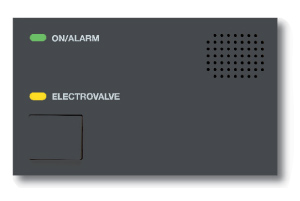 Water leak detector 453RA
Noir |
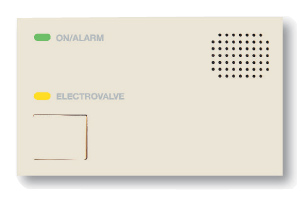 Water leak detector 459RA
Blanc |
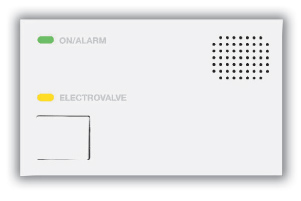 Water leak detector 45BRA
Banquise |
CONNECTING THE AVE WATER LEAK DETECTOR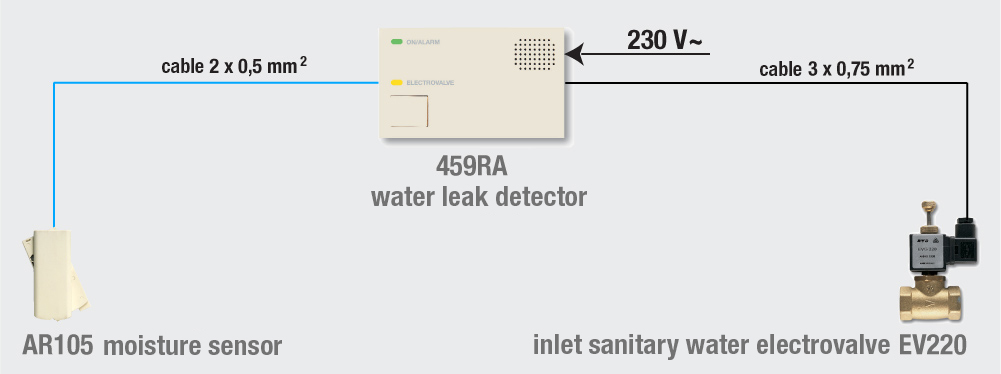
The moisture sensor is mounted near the floor of the room, at the point where water is first expected in the event of leakage. The water leak detector is installed in a wall at a height of 1.2 m - 1.5 m above floor level in the manner described in the introductory part. The water leak detector can be placed in another room than the moisture sensor if necessary. Several water leak sensors can be connected to a single water leak detector.
GAS LEAK DETECTION
Ave offers two types of stand-alone gas detectors designed for detecting liquid petroleum gas and methane. Both types of detector are wall-mounted and are powered through a 230V ac power supply. They have an integrated audible alarm signal, a reset button and a relay output for control of the gas supply line in the event of leakage detection.
The RG1-M and RG1-G gas detectors are made in accordance with CEI UNI EN 50194 type A and CEI EN 50270 type 1.
CONNECTING OF THE AVE GAS DETECTOR
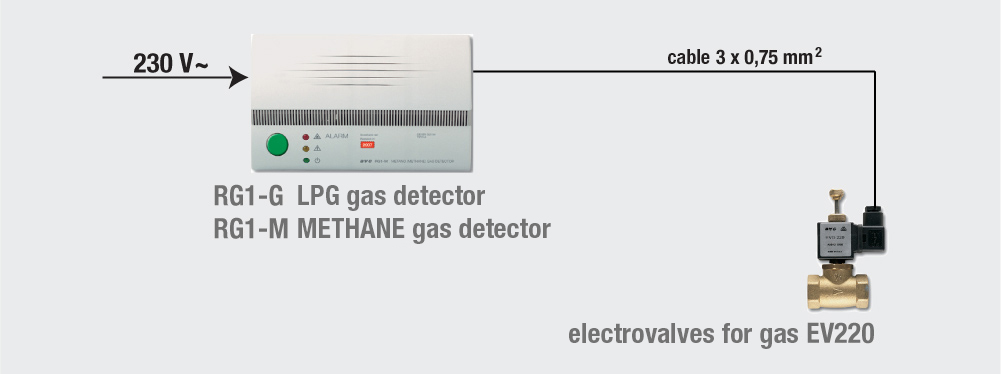
PLACE OF INSTALLATION
Since the specific weight of methane is lower than the specific weight of air, in the event of leakage, this gas naturally rises and accumulates near the ceiling. For this reason, methane detectors are mounted on the wall, 15-30cm from the highest section of the ceiling.
Analogously, since the specific weight of the LPG is greater than the specific weight of air, the LPG detectors are mounted 15-30cm above the floor level because the LPG collects in the lower zone of the room in case of leakage.
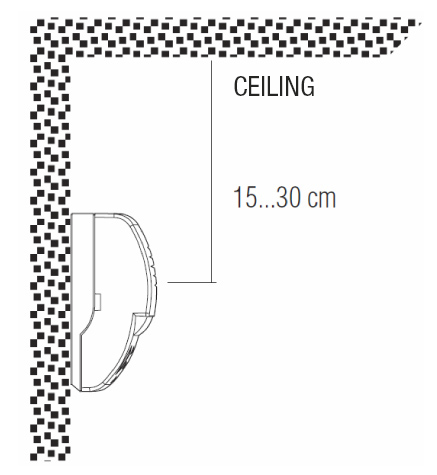 Place of installation of the methane detector
|
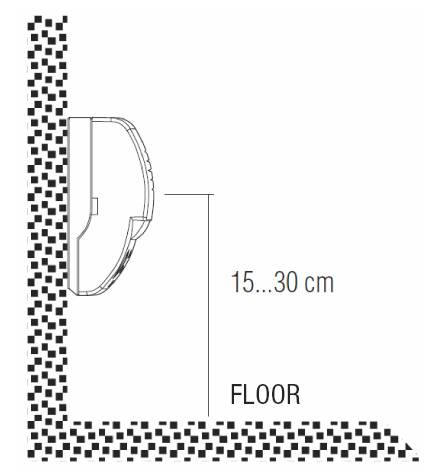 Place of installation of the LPG detector
|
Mount the detector as described below:
- At a distance of 2 to 4 m from the gas appliances (boilers, kitchen appliances, etc.)
- If possible, in every room where gas is used.
- In multi-storey buildings, one device should be installed on each floor, in order to ensure a more secure gas leak detection.
- Closed doors or other obstacles may interfere with the "contact" between the gas and the detector, causing delay, preventing the activation of the alarm, or preventing people from hearing the audible alarm. Therefore, it is advisable to install a sufficient number of detectors and acoustic signalling devices.
Before installing and commencing with the use of the gas detector, be sure to carefully read the manual for the installation and use of the RG1-G (M) gas detector
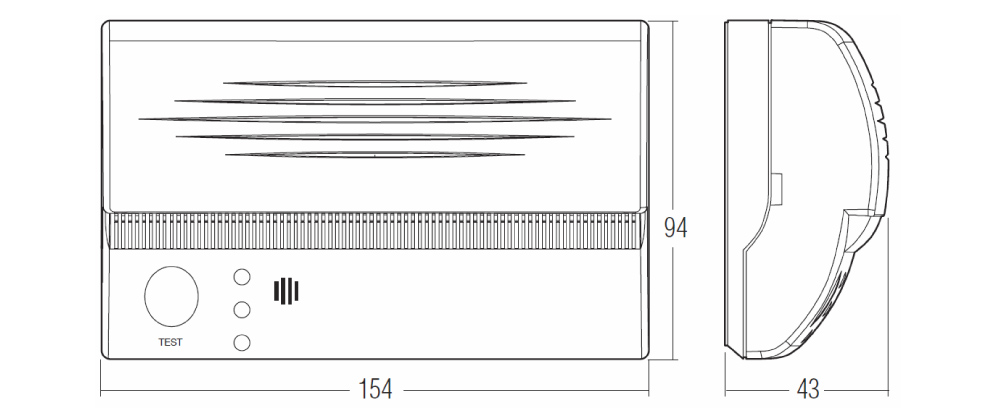 Dimensions of the RG1-G LPG detector and RG1-M methane detector
For more information on technical alarms, please download the following documents:
| Ave safety systems - commercial catalogue |


